From 8 Hours to 45 Minutes: How one of India's largest banks stopped losing money to its own systems

The Silent Erosion: The "Legacy Trap" in Modern Banking
In the race for digital supremacy, the banking C-suite often prioritizes the "glass", the sleek mobile interfaces and AI chatbots that define customer experience. However, the true engine of profitability remains buried in the back office. When this engine is shackled by legacy architecture, it creates a "Legacy Trap": a state where operational friction directly throttles capital velocity.
One of India's largest private sector banks identified a systemic bottleneck that mirrors the challenges of many global incumbents - Service Charge Recovery. Like any other Tier-1 financial institution, its process of calculating and recovering fees, from minimum balance maintenance to SMS alerts, was not just an accounting task; it was a massive data orchestration exercise.
- The Constraint: An on-premise monolithic core struggling under the weight of millions of concurrent records.
- The Latency: A critical charge recovery cycle requiring 6 to 8 hours of dedicated processing time.
- The Opportunity Cost: Due to the risk of system failure, the process was restricted to 2–3 runs per month. This forced the bank into a "batch-lag" reality, delaying revenue realization and leaving significant liquidity stagnant on the balance sheet.
The Strategic Pivot: Decoupling for Digital Agility
By partnering with cloud-native specialists, the bank moved away from a fragile, monolithic pipeline towards a modular "Data Mesh" architecture on Google Cloud Platform (GCP).
This "Hybrid Bridge" model allowed the institution to protect its core investments while offloading high-compute "heavy lifting" to the cloud.
The Architecture of High-Velocity Banking
The engineering team of the bank leaned on Searce's expertise for true transformation instead of a "Lift and Shift", which would merely move the technical debt to a more expensive neighborhood. They consciously chose re-architecting for value.
- The Intelligent Data Lake: Utilizing BigQuery as a centralized landing zone, allowing for the ingestion and analysis of massive datasets without impacting core transactional performance.
- Event-Driven Orchestration: Transitioning from rigid batches to Pub/Sub messaging. By processing events asynchronously, the system gains "fault tolerance"; if one component hits a snag, the entire revenue stream doesn't grind to a halt.
- Elastic Compute (GKE): Using Google Kubernetes Engine to scale resources instantly during month-end surges. The bank now pays for peak performance only when it's needed, transforming a fixed CAPEX burden into an optimized OPEX model.
- Zero-Trust Compliance: Security is not an afterthought. With KMS encryption and Dataflex for PII tokenization, the framework ensures total alignment with stringent regulatory mandates (such as RBI norms) from the first byte of data.
Quantifying the Impact: The Bottom Line
Modernization is an investment, and the dividends in this case were immediate. For "Processing Time," the organization transitioned from an 8-hour monthly batch to just 45 minutes, representing a massive 90% reduction in time spent on revenue realization and manual retry loops. Moving to a cloud-native model replaced monthly batches with daily/on-demand recovery, automating resilience. This transition directly reduced customer friction, resulting in a 20% drop in call volumes.
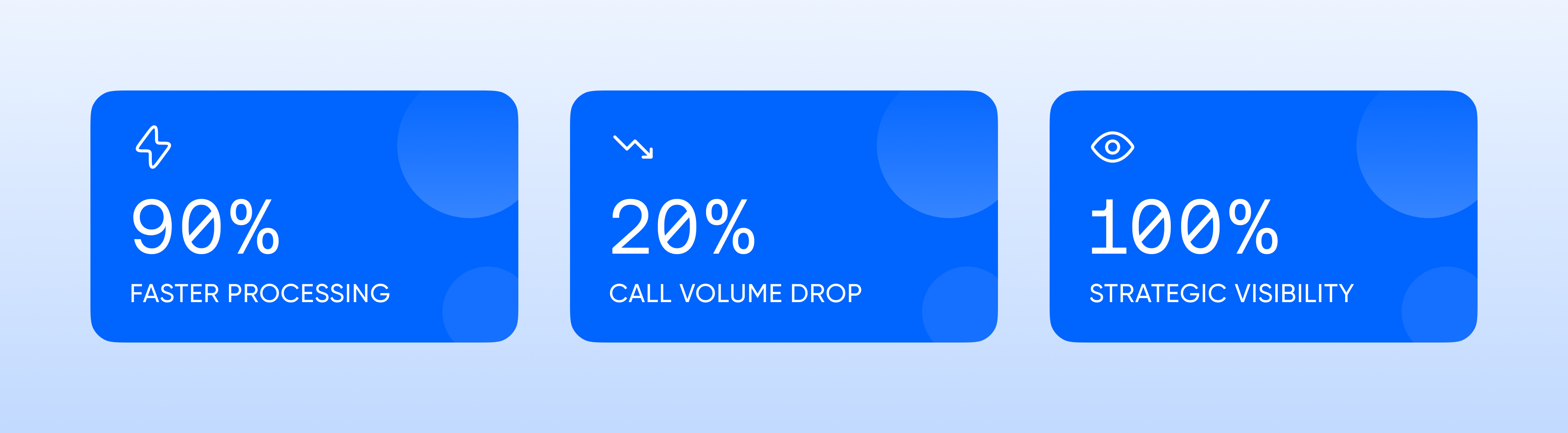
Beyond the numbers, leadership gained Strategic Visibility. Through real-time Looker Studio dashboards, the C-suite can now adjust pricing strategies and forecast revenue with surgical precision, shifting from reactive reporting to proactive steering.
What This Means for Your Institution
The bank's experience points to a replicable approach for unlocking value in any large financial institution:
- Target High-Impact Friction: Don't start with a "Big Bang" migration. Identify a specific backend process—like charge recovery or loan provisioning—where latency equals lost revenue.
- Build Reusable Digital Assets: The "data pipe" created for this project is now a foundation that can accelerate future AI and Machine Learning initiatives across the bank.
- Lead with Governance: Make compliance non-negotiable from day one. Integrating regulatory requirements into the architecture, rather than layering them on afterward, keeps the project moving and keeps auditors satisfied.
Conclusion: The Path Forward
In the current economic climate, an 8-hour processing window is a liability; a 45-minute window is a competitive advantage. The technology to bridge this gap exists today. The question for banking leadership is no longer if you should modernize, but which high-value friction point you will target first to unlock the next wave of liquidity.
Are you ready to turn your legacy challenges into your next competitive advantage? Let's discuss how a similar modular architecture can accelerate your modernization journey.
let's connectmore case studies